


Key Points
- SAP ECC 6.0 mainstream maintenance ends December 2027; extended maintenance continues to December 2030 at additional cost, but archiving strategy must begin now.
- ECC systems contain years of historical financial, HR, tax, and operational data that must remain accessible for regulatory and audit purposes even after the system is decommissioned.
- Migrating inactive ECC data directly into S/4HANA increases HANA database footprint, infrastructure costs, migration complexity, and cutover timelines.
- Regulatory mandates (SOX, GDPR, GoBD, IRS) require financial and HR records to be retained 7–10 years after system retirement, independent of whether SAP is running.
- SAP-native ADK/ILM tools archive into proprietary formats that require a running Content Server for retrieval: a risk when full ECC decommissioning is planned.
- Third-party SAP archiving platforms provide governed, platform-independent access to historical ECC data without requiring SAP to be live post-decommission.
- Best practice: begin ECC archiving assessment 18–24 months before planned decommission to avoid compressing the migration window.
- Archon Data Store helps organizations archive, govern, and access historical SAP ECC data in a platform-independent repository, supporting compliance, S/4HANA migration readiness, and long-term application decommissioning.
SAP ECC continues to support core operations for thousands of enterprises worldwide, and mainstream support ends in December 2027. For CIOs and CDOs, that date is already visible on the planning horizon, but the data archiving and retention implications are still underestimated by most organizations.
The risk is not the shutdown itself. The risk is what gets left behind. ECC databases that have grown over 10 to 20 years contain financial records, payroll histories, audit trails, and transactional data that regulators expect to remain accessible for seven to ten years after the system goes dark.
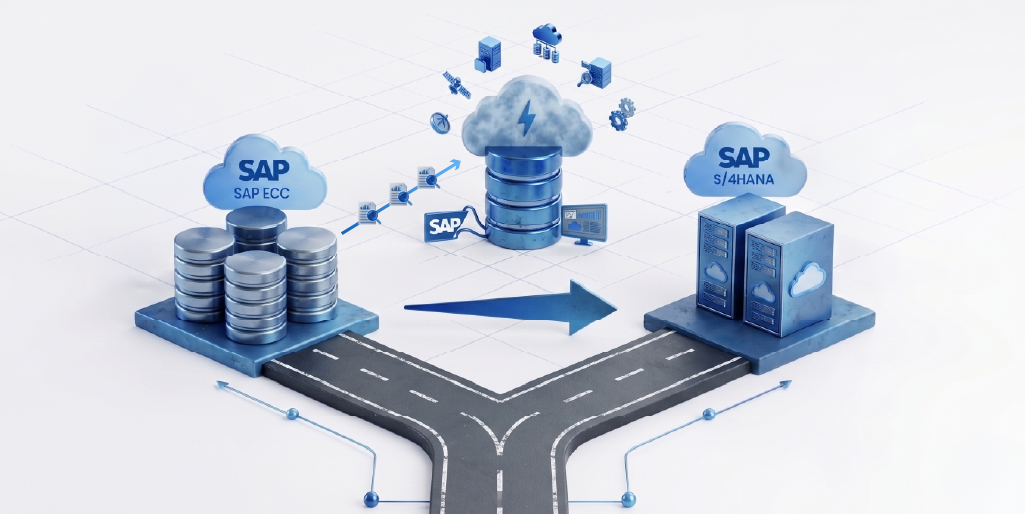
Migrating all of it into S/4HANA inflates the new system’s footprint, extends migration timelines, and drives up HANA in-memory storage costs from day one. These considerations highlight some of the key differences between SAP ECC and SAP S/4HANA.
This guide covers what every CIO, CDO, and IT Architect needs to understand about the ECC maintenance timeline, the data archiving decisions that must precede any migration, and the retention obligations that persist after the system is decommissioned.
What Does SAP ECC End of Maintenance Mean?
SAP ECC end of maintenance is the point at which SAP AG ceases to deliver standard support, legal change packages, and security patches for the ERP Central Component platform. After this date, running ECC without extended maintenance exposes organizations to unpatched vulnerabilities, failed regulatory reporting, and unsupported tax and legal updates.
SAP ECC 6.0 Support Timeline
| SAP Support Phase | End Date | What It Means |
|---|---|---|
| Mainstream Maintenance (ECC 6.0 EHP6–EHP8) | December 2027 | Standard patches, legal updates, SAP Notes delivered |
| Extended Maintenance | December 2030 | Optional extended support with additional maintenance fees; core patches and compliance updates continue |
| Customer-specific Maintenance | After 2030 | Limited support model with reduced update coverage and no new innovation |
| Older EHP versions (EHP7 and below) | Ended 2024–2025 | Organizations on earlier EHPs face earlier cutoffs |
| SAP S/4HANA mainstream maintenance | At least 2040 | SAP’s committed long-term support horizon |
| SAP RISE / BTP cloud ERP | Ongoing | SAP’s preferred transition path post-2027 |
| SAP ERP, Private Edition (RISE Transition Option) | 2031–2033 (select customers only) | Requires RISE with SAP commitment; cloud-hosted ECC; not available to all |
The practical implication is this: organizations have a finite window between now and December 2027 to put a SAP data archiving strategy in place that will survive ECC’s retirement. Waiting until the migration project starts is the most common and most costly mistake.
Assess your ECC archiving readiness before 2027
Why Pre-Migration Archiving Is Non-Negotiable for SAP ECC Data
The instinct in many organizations is to archive data as part of the S/4HANA migration project. This consistently creates two avoidable problems: an oversized HANA database at go-live, and compliance exposure when the first post-decommission audit arrives.
The Database Cost Problem
SAP HANA in-memory storage costs significantly more per terabyte than the Oracle or SQL Server databases underlying most ECC systems. Many SAP ECC environments contain substantial volumes of inactive or rarely accessed historical data that can be archived before S/4HANA migration.
Removing this data before S/4HANA migration reduces the database footprint that must be sized, licensed, and maintained in HANA. Organizations that conduct pre-migration archiving consistently report 30–40% reductions in S/4HANA database sizing requirements.
The Regulatory Retention Problem
Archiving data out of ECC is not deletion. Records archived from ECC must remain accessible, searchable, and auditable in a governed repository. SOX Section 802 requires financial records to be retained for seven years. GDPR requires lawful, retrievable storage of personal data for its legally mandated period. GoBD (Germany), the IT Act (India), and IRS regulations (US) all mandate that financial records remain retrievable in their original format for five to ten years.
An organization that migrates to S/4HANA and decommissions ECC without a governed archive is not compliant: regardless of how cleanly the migration runs.
Also Read: Greenfield, Brownfield, or Bluefield: Which SAP S/4HANA Migration Approach Is Right for You
Which SAP ECC Data Requires Long-Term Retention?
Not all ECC data ages at the same rate. The following table maps the primary data types and their governing retention obligations.
| ECC Module / Data Type | Typical Retention Period | Governing Regulation |
|---|---|---|
| Financial documents (FI/CO) | 7–10 years | SOX, GAAP, GoBD, local GAAP |
| Payroll records (HR/PY) | 7 years post-termination | FLSA, GDPR, state labor laws |
| Purchase orders and vendor invoices (MM) | 7 years | IRS, VAT, customs laws |
| Sales orders and customer invoices (SD) | 7 years | SOX, revenue recognition rules |
| Tax audit extracts (DART) | 10 years in some jurisdictions | GoBD (Germany), IT Act (India), IRS (US) |
| Quality and compliance records (QM) | 10–15 years | FDA 21 CFR Part 11, ISO standards |
| Plant maintenance records (PM) | 10 years minimum | OSHA, ISO 9001, sector standards |
| HR master data and personnel files | 7 years post-termination | GDPR, EEOC, FLSA |
Where two regulations apply to the same data and prescribe different retention periods, apply the longer obligation and document the legal rationale explicitly. That documentation is an auditable record.
Three Archiving Strategies for SAP ECC Before 2027
Organizations approaching the 2027 deadline have three primary options. Each carries different cost, risk, and flexibility characteristics.

Option 1: SAP-Native Archiving with ADK and ILM
SAP’s Archive Development Kit (ADK), administered through transaction SARA, is the native archiving framework. The Information Lifecycle Management (ILM) add-on extends this with policy-driven retention, legal holds, and defensible deletion. For organizations remaining in the SAP ecosystem long-term, native archiving is viable.
SAP-native archiving stores data in SAP-proprietary archive files that require a running SAP Content Server for retrieval. If ECC itself is decommissioned, maintaining access requires either a separate Content Server environment or migration of archive files to a platform-independent system.
Also Read: How To Access ADK Files Without Keeping SAP Alive
Option 2: Third-Party Archiving Platform
Purpose-built SAP enterprise archiving platforms extract, normalize, and store ECC data in formats independent of the SAP runtime. They provide business-context-aware retrieval: archived FI documents retain relationships between header, line item, and payment, and can be queried without SAP being live. This is the preferred approach when full decommissioning is planned.
Option 3: Full Application Decommissioning
Full decommissioning archives all ECC data to a governed platform and shuts down the ECC instance entirely, eliminating ongoing ECC licensing, infrastructure overhead, and security patching obligations.
Organizations that fully decommission legacy ERP systems often reduce infrastructure, licensing, and operational overhead associated with maintaining inactive environments.
Evaluate your ECC decommissioning options
Building an SAP ECC Archiving Roadmap: 6 Steps
An ECC archiving program that begins 18 to 24 months before the planned decommission date gives the organization enough time to execute without compressing the migration window.
- Assess Data: Map tables, volumes, and retention rules. Understand what data exists and the regulatory or business rules governing how long it must be kept.
- Classify: Classify and separate data into specific tiers. Identify what needs to stay live, what needs to be stored, and what can be safely purged.
- Archive: Move data to a WORM (Write Once, Read Many) cold store like ADS (Archon Data Store). Securely transfer non-active data to an unalterable long-term storage repository.
- Validate: Perform integrity checks and legal confirms. Ensure the archived data is accurate, accessible, uncorrupted, and meets all legal compliance requirements. Before S/4HANA cutover, validate that all data subject to retention obligations is governed and retrievable.
- Decommission: Retire the legacy ECC instance. Shut down the old system to completely eliminate its technical debt and operational costs. Obtain sign-off from legal, finance, and compliance before decommissioning ECC.
Organizations that compress or skip this sequence consistently encounter an oversized S/4HANA database at go-live and compliance exposure at the first post-decommission audit.

How Archon Data Store Supports ECC Archiving and Decommissioning
Archon Data Store (ADS) is designed for enterprises archiving data from SAP ECC and other legacy ERP environments. Rather than archiving into SAP-proprietary formats requiring a running Content Server, ADS extracts and normalizes ECC data into a governed, platform-independent archive. This enables organizations to retain long-term access to historical business records even after ECC systems are fully decommissioned.
Platform-Independent Access to Archived ECC Data
ADS preserves the full business context of archived ECC records. FI document headers maintain their relationships to line items, cost center assignments, payment documents, and related transactional records. Finance teams, auditors, and compliance stakeholders can securely search and retrieve archived SAP data through a structured interface without keeping SAP ECC live or paying ongoing SAP licensing costs for historical access.
Pre-Migration Data Assessment and Optimization
Archon Analyzer does pre-archiving data assessment by classifying, profiling, and identifying inactive or redundant ECC data before migration. This helps organizations reduce unnecessary data movement into S/4HANA while improving migration planning, compliance readiness, and storage optimization.
ECC Data Extraction and Referential Integrity Preservation
Archon ETL automates the extraction and transformation while moving ECC data into ADS while preserving referential integrity across complex SAP document structures. Related records remain connected after archiving, ensuring historical data remains audit-ready, searchable, and contextually complete.
Supporting Long-Term SAP Decommissioning Strategy
Together, the Archon helps organizations transition from point-in-time SAP archiving projects to a governed, continuous data management strategy. By separating historical data retention from the live SAP runtime, enterprises can simplify ECC decommissioning, support regulatory retention obligations, and reduce long-term infrastructure and maintenance overhead.
Ready to secure your SAP ECC data ahead of the 2027 maintenance deadline?


