

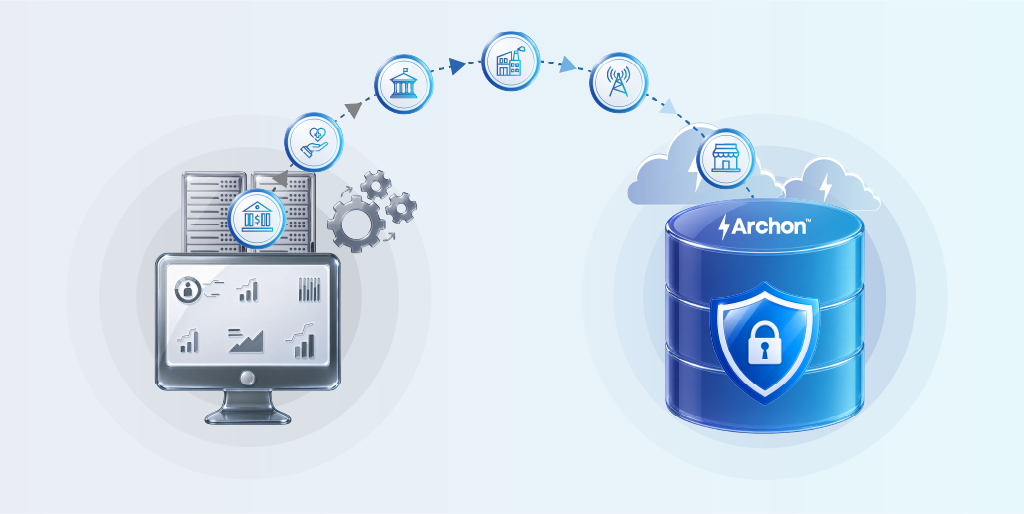

For decades, the European pharmaceutical company relied on an AS/400 legacy ERP system that managed everything from finance and logistics to production planning. Over time, the system’s age became evident. Processes slowed, integrations with modern tools were difficult, and maintaining decades-old code drove up costs.
Modernization turned into a strategic necessity, not just an IT project. The goal was clear, preserve important operational knowledge, simplify workflows, and update infrastructure to meet current business needs without disrupting ongoing operations.
The modernization process started with a thorough assessment of the legacy environment. Key workflows, historical data, and integrations were mapped carefully to ensure critical information was not lost. A hybrid strategy was used: essential functions were moved to SAP ECC, while some legacy processes continued to run in parallel during the transition.
Throughout the project, more than 21 interfaces and 110 adaptations were created to connect old and new systems. Data migration and validation ensured that both historical and transactional data remained intact and compliant. Phased implementation and strict change management reduced risks, while coordinated execution ensured a smooth transition.
The outcome was transformative. Operations continued without interruption, workflows became faster and more efficient, and scalability improved significantly. Tasks that once took hours were now automated and integrated, allowing quick responses to business and market changes.
Legacy complexities were eliminated, historical data was preserved, and compliance was upheld with all whiles keeping business operations continuous.These improvements also create opportunities to retire legacy infrastructure and reduce the costs associated with maintaining aging environments.
This case shows that modernizing legacy systems isn’t just a tech project. To maintain value, manage risk, and release the organization’s potential, this is the right choice.
What Is Legacy Application Modernization?
Legacy application modernization is the process of updating older software systems, databases, and infrastructure to improve performance, scalability, security, and integration with modern technologies.
Consider a vehicle that remains operational but struggles to meet modern performance expectations. Instead of replacing it entirely, upgrading key components can improve efficiency, reliability, and longevity. Legacy application modernization follows the same principle, preserving business value while enhancing capabilities.
Organizations modernize legacy applications to:
- Accelerate the delivery of new features and services
- Enable integration through APIs and modern platforms
- Improve scalability and cloud readiness
- Reduce maintenance costs and technical debt
- Support analytics, automation, and AI initiatives
By modernizing legacy applications, organizations can preserve valuable business functionality while building a foundation for future innovation.
Why Modernizing Legacy Applications Is Key to Future Growth?
Modern enterprises across BFSI, healthcare, manufacturing, and the public sector are under pressure to modernize IT landscape. Yet, the real challenge is not just outdated code or infrastructure, but also the data within aging applications that are too risky and too expensive to replace.
Most modernization projects stall here:
- The app can’t be retired because business units still need historical records.
- According to compliance regulations, records should be retained for five to ten years, or even for 30 years.
- Integration dependencies mean shutting down the system could break reporting, workflows, and audits.
This is where modernization strategies must go beyond “just migrating code” and address data liberation, secure archiving, and application retirement.
We’ll walk you through the real-world examples of modernizing legacy applications, including business outcomes with strategies, and ensure your project delivers a measurable return on investment. Along the way, we’ll spotlight how Archon’s decommissioning and data archiving solutions help organizations overcome the modernization challenges.

A strategic guide to retire aging systems without risk. Learn how to reduce technical debt, control costs, and maintain compliance while keeping historical data accessible.
Challenges of Legacy Application Modernization
An application modernization project requires balancing innovation with compliance and operational continuity. Some of the biggest hurdles are:
Challenge 1: Persistent Data Dependencies
Legacy systems often store decades of structured and unstructured data tied to mission-critical workflows. These records are still accessed for claims processing, customer disputes, or regulatory audits. Without a proper data migration or archiving strategy, retiring the system could cause operational blind spots.
Solution:
- Ensure that historical data is centralized, secure, and searchable.
- Preserve metadata and data integrity to maintain business context.
- Ensure controlled access to archived information without depending on outdated infrastructure.
Challenge 2: Tightly Coupled Integrations
Over the years, legacy applications accumulate a web of API calls, batch jobs, and direct database links to other enterprise systems. Replacing or re-platforming them without breaking these dependencies requires detailed interface mapping and staged cutovers.
Solution:
- Conduct comprehensive interface mapping and dependency analysis before migration.
- Use structured data extraction and transformation pipelines to maintain integration continuity.
- Enable API-driven access to historical data for seamless use in new platforms.
Challenge 3: Stringent Compliance Requirements
In BFSI, healthcare, and public sector environments, retention policies can span 7, 10, or even 30+ years. Compliance frameworks (HIPAA, GDPR, SOX, RBI guidelines) demand that archived data remain immutable, searchable, and evidentially sound. Simply said, you can’t “dump” the data; you must preserve its context, audit trails, and access controls.
Solution:
- Implement archival systems with immutability, version control, and audit logging.
- Apply automated retention policies aligned with specific regulatory requirements.
- Provide advanced search and filtering capabilities for quick compliance reporting.
Challenge 4: Escalating Maintenance & Operational Overhead
As vendor support ends, licenses and hardware become premium-priced liabilities. Worse, the talent pool of engineers familiar with COBOL, AS/400, or mainframe-based stacks is shrinking rapidly, driving up contract costs and slowing recovery during incidents.
Solution:
- Fully decommission outdated systems after safe and complete data migration.
- Transition data to cost-efficient cloud or hybrid storage with tiered pricing.
- Remove reliance on hard-to-find legacy skill sets through modern, intuitive user interfaces.
Did you know?
“As organizations undergo digital transformation, IT leaders must modernize the application portfolio to operate at the pace of business change.”— Meghan Rimol, Gartner
Why Do Legacy Modernization Projects Fail?
Legacy modernization projects often involve complex technologies, undocumented business processes, and large volumes of historical data. While the potential benefits are significant, many initiatives fail to achieve their objectives due to poor planning and execution.
One of the most common causes of failure is inadequate assessment during the early stages of the project. Organizations frequently underestimate application dependencies, hidden integrations, embedded business rules, and the complexity of migrating historical data.
Other common causes of modernization failure include:
- Lack of stakeholder alignment
- Insufficient testing and validation
- Scope creep and changing requirements
- Limited availability of legacy system expertise
- Attempting a large-scale migration
Another contributing factor is the absence of a formal application rationalization strategy. Before modernizing, organizations should determine which applications should be modernized, replaced, consolidated, retained, or retired. This helps eliminate redundant systems, reduce portfolio complexity, and avoid investing in applications that no longer provide meaningful business value.
Successful modernization initiatives typically begin with application discovery, rationalization, dependency analysis, data assessment, and clearly defined business objectives. By addressing risks early and prioritizing the right applications, organizations can significantly improve modernization outcomes while maximizing return on investment.
How Much Historical Data Should You Migrate?
One of the most common mistakes in legacy modernization projects is assuming that every record must be migrated to the new platform. In reality, organizations often discover that only a fraction of historical data is actively used for business operations, while the remainder exists primarily for compliance, audit, or reference purposes.
Migrating decades of inactive data can significantly increase project costs, extend migration timelines, and introduce unnecessary complexity. Before moving data, organizations should classify information based on business value, access frequency, retention requirements, and regulatory obligations.
A practical approach is to separate data into three categories:
- Active Data: Frequently accessed records required for day-to-day operations.
- Reference Data: Historical records occasionally needed for customer service, reporting, or investigations.
- Archive Data: Inactive records retained solely for compliance, legal, or audit purposes.
Instead of migrating everything, many organizations move active data into the modernized application while preserving historical records in a secure archive repository. This approach reduces migration effort, improves application performance, and lowers long-term infrastructure costs while maintaining access to historical information when needed.
A data-driven migration strategy helps organizations modernize faster while avoiding the cost and risk of moving data that provides little operational value.
Key Strategies to Modernizing Legacy Systems
In a legacy app, it’s more like choosing a path based on where you’re starting, how much you’re willing to invest, and what you want at the finish line.
Some businesses need a quick fix to stay afloat, while others want to rebuild from the ground up to future-proof their systems. Whichever side you’re on, understanding the right strategy can save you a ton of time, money, etc.

Business Outcomes & ROI for Modernizing Legacy Systems: What’s in It for You?
Let’s be honest, business modernizing legacy systems isn’t just another IT task to check off your list. It’s a game-changer that drives real business value. When done right, it helps your teams move faster, launching new features and responding to market shifts without getting down by outdated tech. You’ll reduce expensive upkeep and tedious manual tasks, freeing your team to concentrate on what truly drives business growth.
Plus, you get stronger, more reliable systems that can handle whatever you throw at them, while making compliance and data security feel like a breeze. And at the end of the day, it all comes back to your customers, like modern apps mean faster, smoother, and more intuitive experiences that keep them coming back.
Did you know?
Legacy systems in life and P&C are built on outdated architectures with high maintenance costs, inherent inflexibility, redundant features, lack of connectivity, and low efficiency. Complex application and process logic is often hard-coded and undocumented. — Gartner
Is Your Legacy Architecture Blocking AI Initiatives?
If your organization is eager to deploy AI-powered analytics, automation, and decision-making tools, your legacy architecture should be the biggest obstacle standing in the way.
AI initiatives depend on accessible, high-quality, and well-governed data. Unfortunately, legacy applications often store critical information in proprietary databases, siloed systems, outdated file formats, or tightly coupled architectures that make data difficult to access and analyze.
Common blockers for AI readiness are:
- Data trapped inside legacy applications
- Limited or nonexistent APIs
- Poor data quality and inconsistent formats
- Fragmented data spread across multiple systems
- Lack of metadata and business context
- High costs associated with extracting historical records
Modernization is about making enterprise data usable for future innovation. Organizations that modernize their data architecture can create a foundation for AI initiatives by improving data accessibility, governance, and integration across business systems.
In many cases, the first step toward AI readiness is not replacing every legacy application. Instead, organizations can centralize historical data in a governed archive repository, making information available for reporting, analytics, and AI projects without maintaining aging applications indefinitely.
Before launching AI initiatives, organizations should evaluate:
- Can AI tools access the data stored in legacy systems?
- Is historical data available in a usable format?
- Are data definitions and business rules documented?
- Can information be integrated across applications and business units?
- Does the current architecture support enterprise-wide data access?
Organizations that address these foundational challenges are better positioned to unlock value from AI while reducing the operational burden of maintaining legacy technology.
| Approach | Description |
|---|---|
| Retain | Components are reused within a new architecture, often accessed through APIs. Microservices allow gradual expansion with low risk. |
| Rehosting | Implement a new platform or infrastructure without modifying the legacy application code. Technical debt may not be addressed, but the process is quick and low-risk. |
| Re-platforming | Implement minor code changes to enhance performance, scalability, or compatibility of the application on a new platform. |
| Refactoring | Ensure that core functionality is preserved while reorganizing and rewriting portions of the codebase. |
| Rearchitecting | Improve the application comprehensively by redesigning and rebuilding it from scratch using modern frameworks, architectures, and technologies. |
| Replacing / Rebuilding | A new, off-the-shelf, or custom-built solution may be more cost-effective and efficient than the legacy application. |
Industry Snapshots: The Legacy-to-Modern Journey
1: Finance: Decommissioning Risk Management & Compliance Reporting Systems
Challenge:
A multinational investment firm relied on a legacy risk management platform built in the early 2000s. It stored over 20 years of regulatory reports, trade confirmations, and audit logs. The platform was incompatible with new compliance tools, costly to maintain, and unable to meet evolving SEC and MiFID II retention requirements without manual effort.
Archon Solution:
- Migrated inactive trading, portfolio, and compliance records into Archon Data Store (ADS) with secure, compliant archival.
- Implemented end-to-end encryption and immutable storage to protect sensitive financial data.
- Applied metadata-driven retention policies aligned with SEC and FINRA requirements.
- Decommissioned outdated portfolio and compliance applications, preserving complete audit trails.
- Enabled federated search for instant retrieval of archived trade confirmations, reports, and investor communications.
- Offered hybrid/cloud deployment for cost-effective scaling of large historical datasets.
Outcome:
After migrating over 20 years of regulatory reports, trade confirmations, and audit logs from the legacy risk management platform to ADS, the investment firm achieved zero data loss during the migration, immediate retrieval, reduced operational risks, and an improved data security posture, as well as future-proofed compliance.
2: Banking: Decommissioning Core Banking Systems without Losing Historical Data
Challenge:
A leading bank relied on a 25-year-old core banking application running on IBM iSeries, storing millions of customer and transaction records. The platform was costly to maintain, lacked integration with modern digital banking systems, and posed compliance risks under evolving regulations such as Basel III, PCI DSS, and GDPR. Retrieving historical data for customer inquiries was slow and resource-intensive.
Archon Solution:
- Extracted and migrated historical customer, transaction, and compliance data into ADS) a centralized, secure, and searchable archive.
- Applied end-to-end encryption, role-based access control, and full audit trails to ensure compliance with PCI DSS, GDPR, and other financial regulations.
- Enabled metadata tagging and indexing for quick data retrieval during audits, disputes, or compliance checks.
- Used storage tiers (hot, warm & cold) and data compression to reduce infrastructure costs.
- Integrated archived data with new core banking and digital platforms via secure APIs.
- Decommissioned IBM iSeries systems, eliminating licensing and maintenance overhead.
Outcome:
The bank achieved compliance with global banking regulations, reduced IT maintenance costs, and improved audit response times from weeks to minutes while freeing resources for digital transformation initiatives.
3: Healthcare: Archiving Legacy Patient Records from Lotus Notes
Challenge:
A state tax department operated an outdated mainframe application for processing tax returns, payment records, and audit histories dating back over 30 years. The platform lacked integration with new e-filing systems and required expensive legacy mainframe support contracts. Regulatory mandates required certain records to be retained for decades, making data migration complex.
Archon Solution:
- Migrated inactive patient data to Archon Data Store (ADS) with data compression and deduplication to reduce storage costs and improve performance.
- Enabled HIPAA-compliant long-term archival with end-to-end encryption, immutable audit trails, and metadata-driven retention policies.
- Decommissioned legacy EHR systems like Epic and Cerner while preserving metadata for accurate and compliant migration.
- Integrated Patient3Sixty for a unified, 360° view of patient records across multiple EMRs.
- Provided on-prem, cloud, or hybrid deployment for secure storage of large files (X-rays, CT scans, MRIs).
- Delivered eDiscovery-ready search and retrieval capabilities for audits, litigation, and compliance reviews.
Outcome:
Reduced EHR storage costs by half, eliminated millions in annual legacy maintenance fees, improved interoperability, and maintained full HIPAA compliance. Clinicians gained single-point access to historical patient data, cutting record retrieval time and supporting better patient care, audits, and legal readiness.
4: Government: Digitizing & Archiving Paper-Scanned Records from Legacy Systems
Challenge:
Many government departments from central, state, and local manage enormous volumes of sensitive records, often stored on decades-old legacy systems. Maintaining these systems is expensive, consumes IT resources, and poses security risks. Compliance with regulations such as HIPAA, GDPR, and PSII is difficult due to slow data retrieval, a lack of audit readiness, and limited search capabilities.
Archon Solution:
- Implemented immutable, tamper-proof archives to safeguard sensitive government records from unauthorized changes.
- Delivered compliance-ready archival meeting federal, state, and local public record retention regulations.
- Decommissioned outdated government applications while preserving metadata and ensuring accurate migration.
- Enabled secure, role-based access for internal departments and public-facing requests.
- Integrated eDiscovery and advanced search for faster retrieval during audits, litigation, or public inquiries.
- Provided hybrid and cloud deployment options to optimize storage for large, high-resolution datasets (e.g., GIS maps, scanned deeds).
Outcome:
Lowered legacy system maintenance costs by millions annually, reduced record retrieval times from weeks to minutes, and improved transparency with compliance-ready, easily searchable archives. Enabled secure public access to historical data while ensuring complete data integrity for audits and legal reviews.
Recommended for you: Healthcare Data Archiving: Everything You Need to Know
Modernize Legacy Applications: The Archon’s Approach
Still tied to outdated systems just because of the data locked inside them?
With Archon Data Store, you don’t have to choose between keeping outdated systems or risking data loss. By migrating critical information, securely archiving it, and ensuring instant access whenever needed, you can ensure a smooth transition and maintain data integrity.
For global banks like JP Morgan, PNB, Standard Chartered, ANZ, and TMB Bank, the challenge wasn’t just technology; it was history. Some years or decades of records lived inside legacy systems built on COBOL and AS400, systems that had once powered daily operations but were now slowing down.
When these banks began decommissioning their aging core applications, the question wasn’t “what to throw away” but rather “how to preserve everything that matters.” There are millions of records span branches, fiscal years, GL codes, and transaction types to be archived securely, without losing accessibility.
This was possible with Archon Data Store. All records were intelligently tagged, stored in a WORM-compliant environment, and protected with full legal hold support to ensure both audit and regulatory compliance. Consequently, banks were able to shut down costly legacy systems while still maintaining access to decades of financial history instantly and reliably.
1. Cost Efficiency
Archon Data Store is designed with a cost-optimized architecture that reduces both operational (OPEX) and capital (CAPEX) expenses while ensuring long-term scalability:
- Archon Data Store supports multi-tier storage (hot, warm, cold, and deep archive) across AWS S3, Azure Blob, and GCP buckets.
- Advanced algorithms minimize storage footprint by eliminating redundant records and applying compression, reducing storage costs.
- By using intelligent indexing, queries can run directly against archived datasets without rehydration, thereby reducing the computational requirements for reloading large legacy databases.
2. Metadata Tagging
Archon Data Store makes archived data findable without relying on the legacy application:
- Automated metadata adds context such as account number, transaction type, customer ID, or case reference.
- Full-text index enables rapid search across both structured and unstructured datasets.
- Advanced query capability supports complex filters, Boolean operators, and compliance-driven search queries for audits.
- Adds descriptive context so archived data is meaningful and usable beyond its raw technical format.
3. Data Bunker for Security
ADS archived information is protected for years or even decades within a logically isolated, fortified environment
- A logically isolated and hardened environment to shield archives from breaches and operational risks.
- AES-256 encryption at rest, TLS in transit, and WORM storage ensure evidentiary integrity.
- Multi-layer role-based access control (RBAC) for least-privilege enforcement.
4. Compliance Regulation
Archon makes governance seamless by embedding compliance controls right into your archived data.
- Every access, search, or export is logged with time stamps and user IDs.
- Built-in policy frameworks map to GDPR, HIPAA, SOX, SEC Rule 17a-4, FINRA Rule 4511, and country-specific data laws.
- Generate, approve, and execute defensible deletion workflows when data reaches end-of-life.
5. Fast Data Retrieval
When legacy apps are gone, you still need quick access to decades of business records, whether it’s for audits, legal cases, or internal reports.
- ADS enables Google-like search across structured (databases) and unstructured (PDFs, emails, XML) data.
- Retrieve and feed archived data directly into BI tools, analytics platforms, or e-discovery systems.
- Optimized indexing ensures sub-second query responses across billions of records.
With Archon Data Store, organizations can finally retire outdated applications without fear, secure historical records, and keep live operations running seamlessly. Teams across industries, from banking to healthcare, retail to government, can innovate, respond faster, and deliver better experiences to their customers, all while maintaining compliance and data integrity.
Contact us today to learn more about how we can transform your business. Curious about our method?


