


TL&DR;
Enterprises operating within key ASEAN jurisdictions face their greatest PDPA compliance risk in overlooked historical and archived data. Legacy platforms, over-retention, and limited visibility increase regulatory, legal, and operational exposure.
PDPA applies equally to historical data, requiring enforceable retention, secure deletion, audit readiness, and proper governance. Modern data archiving enables organizations to meet these requirements while safely decommissioning legacy systems, reducing costs, and supporting scalable compliance.
By using Archon Data Store (ADS), organizations can gain visibility into historical data, reduce PDPA compliance risk, and stay compliant as regulations and business needs evolve.
Maya joined the organization as Chief Data Officer at a time when its operations spanned multiple ASEAN countries, each governed by distinct regulatory regimes. Early on, she identified a critical blind spot: historical data sat outside the organization’s formal governance structures.
Because this data was rarely accessed and seldom surfaced operational issues, it had quietly escaped scrutiny. It wasn’t actively managed, consistently governed, or strategically accounted for. Over time, its perceived inactivity had allowed it to fall below the organization’s priority threshold.
Maya understood the risk of this assumption. Historical data cannot simply be deleted, nor can it be left unmanaged. It must be preserved, protected, and governed with intent, ensuring integrity, preventing misuse, and meeting evolving regulatory obligations.
Recognizing this, she challenged the leadership team to confront the issue directly and take deliberate action before oversight turned into exposure.
Maya devised her plan on historical data management and presented the challenges and risks of ignoring compliance, to the leadership. She introduced PDPA compliance strategies and how their organization can be saved from penalties.
While active systems seemed compliant, the real risk lived in old systems and archived data.
As data grows, systems change, laws evolve, and business use-cases multiply. PDPA compliance also becomes complex over time.
Maya’s briefing cleared all the uncertainties of the historical data regulations, and the leadership was impressed.
How did Maya convince them? Here’s how she laid it out.
Understanding PDPA across ASEAN Nations
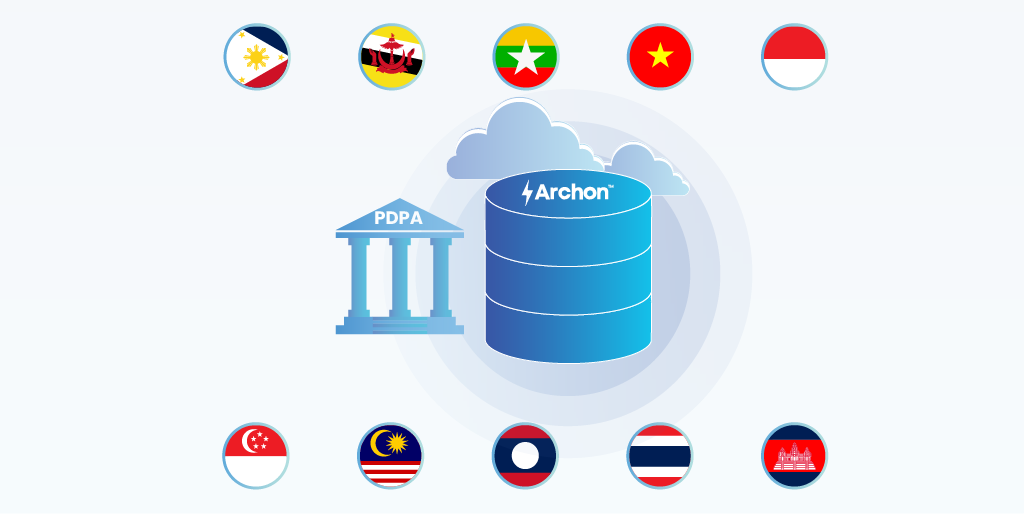
Maya explained that ASEAN enterprises are not governed by a single, uniform data protection law, but by a group of PDPA-like regulations that share common principles.
Key ASEAN jurisdictions with PDPA-like laws include:
- Singapore – PDPA
- Malaysia – PDPA
- Thailand – PDPA
- Indonesia – PDP Law
- Philippines – Data Privacy Act
- Vietnam – Personal Data Protection Decree
While details vary, the core compliance expectations are largely aligned across ASEAN countries.
She further noted a critical shift in regulatory expectations: historical data can no longer be treated as dormant or out of scope. Also, under PDPA, dormant data needs to be handled. If personal data exists, organizations must be able to explain why it exists, how it is protected, and when it will be removed.
PDPA Non-Compliance Challenges for ASEAN Enterprises
Maya then addressed the challenges faced by their organization so far, not all were aware:
- Fragmented data across countries and systems makes it difficult to maintain a unified view of personal data to enforce consistent PDPA controls.
- Over-retention of personal data increases regulatory risk by keeping information longer than legally or purposefully justified.
- Legacy systems that cannot enforce retention or deletion prevent organizations from meeting PDPA requirements without costly manual intervention.
- Limited visibility into historical data weakens audit readiness and the ability to respond to audit requests.
- Cross-border data governance complexity arises from differing PDPA rules, data residency requirements, and enforcement standards across ASEAN countries.
She then concluded that these challenges aren’t failures; they need to rethink managing past data with PDPA principles.
What PDPA Requires From ASEAN Enterprises
Maya outlined the principles of PDPA that their organization is required to follow to manage active and historical data:
Retention limitation – means data cannot be kept indefinitely. If there is no legal or contractual reason to delete them, they should not remain.
Purpose limitation – requires organizations to reassess whether old data still serves its original purpose.
Access and correction rights – give individuals the right to request their data, even if it was collected years ago.
Erasure obligations – demand secure, defensible deletion once retention periods expire.
Security safeguards apply equally to archived and active data.
Maya underscored the potential risks associated with non-compliance.
If PDPA compliance standards are ignored, any ASEAN organization might face serious legal, financial, operational, and reputational consequences that escalate over time.
- Regulatory fines and revenue-based penalties
- Criminal liability for executives or employees (in some jurisdictions)
- Forced data deletion or suspension of data processing
- Failed audits, investigations, and compliance reviews
- Legal action, compensation claims, and civil lawsuits
- Increased likelihood and impact of data breaches
- Loss of customer trust and brand reputation
- Restrictions on cross-border data transfers and partnerships
- Rising IT, cloud, and legacy system maintenance costs
- Weak audit trails and an inability to prove consent or data usage
- Delayed digital transformation due to legacy system lock-in
- Competitive disadvantage and lost business opportunities
Here is the list of typical penalties for non-adherence to personal data protection laws among key ASEAN nations:
| Country | Admin Fines | Criminal Penalties | Additional Sanctions |
|---|---|---|---|
| Singapore | Up to SGD 1M or 10% turnover | Yes (limited offences) | PDPC directions, forced deletion |
| Malaysia | Up to MYR 1M | Yes (up to 3 yrs) | N/A |
| Thailand | Up to THB 5M | Yes (up to 1 yr) | Civil compensation |
| Philippines | PHP 500k to 2M | Yes (1.5 to 5 yrs) | N/A |
| Indonesia | Up to 2% revenue | Yes (4 to 6 yrs) | Suspension, revocation |
| Vietnam | Up to 5% revenue or VND 3B | Yes (via other laws) | High fines for data trading |
Here, Maya introduced the Data archiving strategy and how it helps comply with compliance policies across ASEAN countries.
Can’t locate auditable records when regulators ask? Start PDPA-aligned archiving with Archon.
The Role of Archiving in PDPA Compliance for Historical Data
By now, the room reflected mixed perspectives; some wanted to protect active data, whilst others were curious about historical data compliance.
Maya realised the criticality of the situation, and she put forth the importance of data archiving in PDPA compliance.
She positioned archiving as a strategy for managing active data and the vast volume of historical data that quietly accumulates over time. The reason why modern data archiving plays a critical role for ASEAN enterprises.
Separating Active Data from Inactive Data
Modern intelligent archiving solutions allow organizations to separate active and inactive personal data, ensuring that day-to-day systems remain lean while historical data is stored securely and compliantly. By moving inactive data out of production systems, enterprises reduce operational complexity without losing access to records required for audits or legal needs.
Enforcing Consistent Retention and Deletion Policies
She highlighted that archiving solutions apply retention rules centrally and automatically, ensuring personal data is kept only as long as required under PDPA. This eliminates manual errors and provides defensible proof of compliance during audits.
Reducing Compliance Exposure
Minimizing the volume of stored personal data directly reduces regulatory risk. Archiving ensures only necessary data is retained, limiting the impact of breaches and strengthening overall data protection posture.
Supporting Audits and Regulatory Inquiries
With centralised, searchable archives, Maya noted that responding to audits or PDPA inquiries becomes faster and less disruptive. Required records can be accessed quickly without relying on outdated systems or manual searches.
Enabling Compliant System Decommissioning
Modern archiving allows organizations to retire legacy systems safely. Historical data remains accessible, secure, and compliant, eliminating the cost and risk of maintaining obsolete platforms.
Maya indicated that as ASEAN enterprises modernize and migrate to cloud environments, modern data archiving becomes essential for sustainable PDPA compliance.
The Business Impact of PDPA-Compliant Archiving
The presentation outlined the tangible business value delivered through data archiving:
- Lower storage and maintenance costs by reducing reliance on legacy systems and minimizing inactive data in production environments.
- Improved operational efficiency by allowing teams to focus on active data without managing unnecessary historical records.
- Faster audits and regulatory responses through centralized, searchable access to archived data.
- Reduced legal and security exposure by limiting access to sensitive personal data and enforcing retention policies.
- Scalable compliance as regulations evolve, enabling organizations to adapt to changing PDPA requirements across ASEAN countries.
She also added some tidbits for best practices for Managing Historical Data Under PDPA by:
- Conducting data discovery and classification
- Defining PDPA-aligned retention policies
- Segregating personal, sensitive, and business-critical data
- Ensuring audit-ready access without operational dependency
- Implementing defensible deletion and legal holds
- Maintaining data integrity and immutability
These benefits make a compelling case for ASEAN enterprises to prioritize data archiving as a strategic initiative.
Maya came up with Archon Data Store (ADS), exclusively built for secure and compliant data archiving that could eliminate the risks and challenges they would face otherwise.

The Archon Advantage: Simplifying PDPA Compliance
Maya knew that implementing PDPA compliance across historical and legacy data could be overwhelming without the right tools. She chose Archon Data Store (ADS), a modern intelligent archiving solution designed to make compliance not just possible, but manageable.
Here’s why Maya recommended Archon Data Store (ADS) for her organization:
PDPA-Aligned Retention and Defensible Deletion
With Archon Data Store, retention policies are automated and aligned with PDPA requirements. Data is retained only as long as legally or contractually necessary, and when it reaches the end of its lifecycle, deletion is secure, consistent, and fully auditable.
This eliminates manual errors and ensures defensible deletion, reducing the organization’s exposure to compliance penalties.
Centralized, Searchable Historical Data
Archon Data Store consolidates historical and legacy data into a single, secure repository. Instead of digging through multiple systems and archives, Maya’s team can quickly locate and retrieve records.
Centralization improves efficiency and provides full visibility into what data exists, where it resides, and who has access.
Faster Response to Data Principal Requests
Responding to data subject access requests (DSARs) is no longer a stressful, time-consuming task. With Archon’s search and retrieval capabilities, Maya’s team can respond promptly to requests for access, correction, or deletion of personal data, ensuring regulatory compliance and enhancing trust with customers.
Secure Access and Accountability
Archon enforces role-based access controls and maintains detailed audit trails, ensuring that only authorized personnel can access sensitive information. Every action is logged, providing accountability and transparency, and giving Maya confidence that her organization is handling personal data responsibly.
Safe Legacy System Decommissioning
Archon allows her enterprise to safely retire obsolete or near-end-of-life systems. Historical data remains secure, accessible, and compliant, even after the legacy systems are decommissioned.
Decommissioning reduces maintenance costs, minimizes risk, and simplifies IT operations – all without compromising compliance.
ASEAN PDPA compliance starts with historical data visibility. Archive now to surface them.
Frequently Asked Questions
Malaysia’s PDPA principles are:
- General
- Notice and Choice
- Disclosure
- Security
- Retention
- Data Integrity
- Access


