

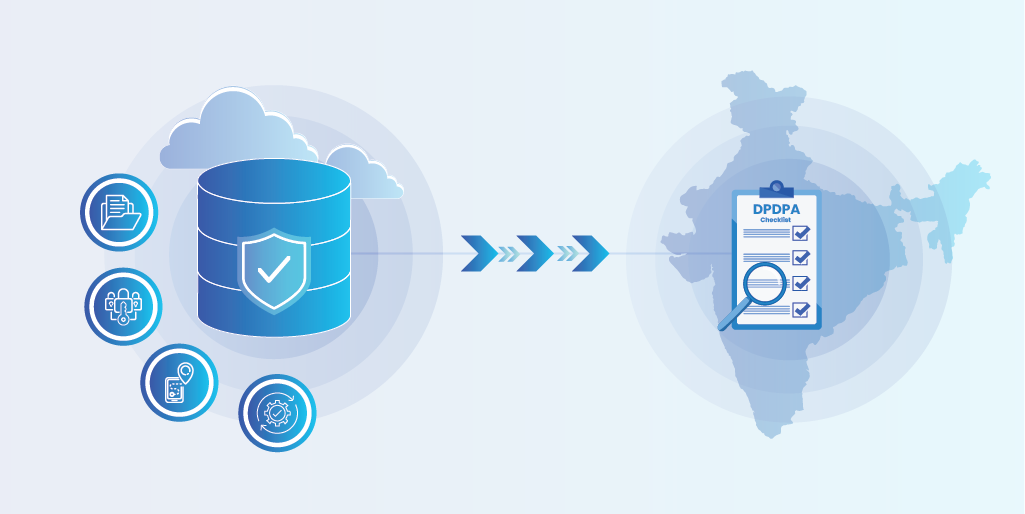

TL&DR;
India’s Digital Personal Data Protection Act (DPDPA) compliance shifts enterprise compliance from policy intent to operational proof. Organizations must now demonstrate how personal data is stored, retained, accessed, and deleted across their entire lifecycle, including active systems, archives, backups, and long-retired platforms.
For most enterprises, the highest compliance risk lies in historical personal data scattered across legacy applications and unmanaged storage, where retention enforcement, deletion workflows, audit trails, and access controls are weak or nonexistent.
To meet India DPDPA expectations, enterprises need a centralized, governed data architecture that enables consistent classification, purpose-based retention, provable deletion, and audit-ready visibility across all data states. A compliance-grade archiving layer is essential to operationalize these controls and withstand regulatory scrutiny.
Are you confident your historical data would stand up to a DPDPA audit? If so, consider this.
In a recent DPDPA audit in India, a Data Fiduciary was required to prove that all customer personal data and inactive records older than seven years had been defensibly deleted. While policies indicated the data should no longer exist, the audit revealed a different reality.
What Does the Evolution of DPDPA Expect from Enterprises?
DPDPA evolves how organizations must treat this data sprawl.
Enterprises must justify:
✅ Why personal data still exists
✅ How long is it retained
✅ Where it lives
✅ How it will be deleted once its purpose ends across active systems

What are the DPDPA Compliance Challenges for Enterprises?
From a regulator’s perspective, these are the most common gaps enterprises face under DPDPA.
✅ Retention policies exist, but are not consistently enforced
✅ Legacy systems cannot apply purpose-based retention rules
✅ Archived data and backups sit outside active governance
✅ Deletion actions cannot be reliably executed or verified
✅ Audit-ready proof of deletion is difficult to produce
✅ Historical personal data remains scattered and unmanaged
What Must Enterprises Put in Place to Govern Data Under DPDPA?
To address this, enterprises need a centralized, governed way to manage inactive and historical personal data.
✅ Centralized control over inactive and historical personal data
✅ Consistent, policy-driven retention enforcement across systems
✅ Tamper-resistant, compliance-grade storage
✅ Automated, defensible deletion at retention expiry
✅ Audit-ready evidence and traceability
✅ End-to-end lifecycle visibility
How Does a Compliance-Focused Archiving Solution Help Meet DPDPA Requirements?
According to DPDPA requirements, archiving solutions help enterprises maintain, store, and delete historical personal data.
✅ Safely retire legacy systems.
✅ Reduce unnecessary personal data.
✅ Apply DPDPA-aligned retention controls.
✅ Execute defensible, policy-driven deletion.
✅ Bring historical records under centralized governance.
See how a compliance-grade archiving solution can close your retention and deletion gaps.
Does your Enterprise Fall into Any of the Following Categories?
Check below to quickly assess whether your organization falls within the scope of DPDPA:
✅ DPDPA applies to any entity with operations in India, covering customer, employee, payroll, vendor, and internal personal data.
✅ Global enterprises, SaaS providers, digital platforms, and remote employers are in scope even when systems and data are hosted outside India.
✅ Cross-border storage is permitted, but accountability remains with the enterprise. Retention, access control, audit logging, and deletion obligations must be enforced consistently across all locations.
DPDPA defines personal data as” any data about an individual who is identifiable by or in relation to such data.”
– Sub-clause (t) of section 2 of the DPDP Act.
What Penalties Can Enterprises Face Under the DPDPA Act?
The DPDP Act, 2023 introduces financial penalties to enforce accountability in how personal data is handled.
Source link: Press Release:Press Information Bureau
| Nature of violation/breach | Penalty |
|---|---|
| Failure to implement reasonable security safeguards to prevent personal data breaches (Section 8(5)) | Up to INR 250 crore (~ $30.213 million) |
| Failure to notify the Board or affected Data Principals of a personal data breach (Section 8(6)) | Up to INR 200 crore (~ $24.17 million) |
| Non-compliance with obligations relating to children’s personal data (Section 9) | Up to INR 200 crore (~ $24.17 million) |
| Failure to meet additional obligations of a Significant Data Fiduciary (Section 10) | Up to INR 150 crore (~ $18.127 million) |
| Breach of duties by a Data Principal (Section 15) | Up to INR 10,000 (~ $120) |
| Any other violation of the DPDP Act or Rules | Up to INR 50 crore (~ $6 million) |
Source link: THE DIGITAL PERSONAL DATA PROTECTION ACT, 2023
What Must Enterprises Prepare for DPDPA Rules 2026?
Enterprises should expect increased scrutiny in the areas below:
✅ Purpose-based retention enforcement
Retention rules and timelines must be clearly defined for each category (HR, payroll, CRM, finance) and aligned with applicable sectoral laws and regulations.
✅ Inactivity-based deletion expectations
Personal data must be removed once its purpose is fulfilled, or legal retention expires, no matter where the data lives.
✅ Audit-ready logs and metadata retention
Every deletion must be backed by logs, confirmations, and audit-ready evidence that stands up to regulatory review.
✅ Accountability for cross-border data flows
Cross-border data residency does not shift accountability; retention and deletion enforcement remain mandatory.
✅ Stronger governance for Significant Data Fiduciaries (SDFs)
Enterprises classified as SDFs must implement enhanced governance, monitoring, and accountability measures.
Unsure whether your archived data meets DPDPA requirements?
DPDPA Compliance Readiness: What Enterprises Must Prove Now
Use the sections below to objectively assess readiness across retention, storage, and governance.

✅ Governance
- Appoint a DPO or compliance owner (where applicable)
- Define ownership for data retention, storage, and deletion
- Identify and document all data processors and sub-processors
✅ Data Inventory
- Maintain an enterprise-wide inventory (HR, CRM, ERP, legacy systems)
- Map personal data across applications, archives, and backups
✅ Policy Readiness
- Update privacy notices
- Define and approve a data retention policy
- Publish cookie policy (if applicable)
✅ Consent & Lawful Processing
- Implement a Consent Management Platform (CMP)
- Scan and classify cookies and trackers
- Maintain auditable consent records
- Enable simple consent withdrawal
✅ Data Principal Rights
- Set up intake and tracking for rights requests
- Enable access, correction, and erasure
- Implement grievance redressal with clear SLAs
✅ Retention & Deletion
- Define retention periods by data category
- Align retention with sectoral laws (IT Act, Income Tax, Labor Codes, RBI, IRDAI)
- Enforce automated deletion when the purpose ends or retention expires
- Maintain proof of deletion (logs, confirmations)
✅ Archiving
- Archive only the legally required inactive data
- Ensure archived data is read-only and governed
- Decommission legacy systems without losing compliant data access
✅ Storage Security & Access Governance
- Encrypt data across live systems, archives, and backups
- Enforce role-based access and MFA
- Maintain immutable access and activity logs
- Conduct periodic access reviews and security assessments
✅ Cross-Border & Vendor Governance
- Verify permitted data storage and transfer locations
- Update data processing and cross-border agreements
- Document global data flows
- Conduct DPIAs for high-risk processing
- Ensure processors meet retention and deletion obligations
✅ Monitoring & Continuous Compliance (Ongoing)
- Run regular internal audits
- Maintain audit-ready logs and metadata
- Track compliance KPIs and risks
- Review retention schedules as regulations evolve
- Train staff on data retention and handling obligations
Read also: Financial Services Archiving: Compliance-enabled Archiving for Sensitive Financial Data
How Archon Data Store (ADS) Enables DPDPA-Compliant Data Retention and Archiving?
Archon Data Store (ADS) provides a governed, compliance-grade archiving layer that helps enterprises manage long-term and historical data safely, consistently, and in line with DPDPA requirements.

1. Centralized Compliance Archive for Historical Personal Data
✅ Structured, normalized storage of cross-platform data
✅ Full preservation of relationships, identifiers, and business logic
✅ Decoupling of retention governance from application lifecycles
✅ Continued audit-ready access even after system decommissioning
2. Policy-Driven Retention & Defensible Deletion
✅ Automatic tracking of retention timelines and purpose-based expiration
✅ Controlled, irreversible deletion workflows once retention ends
✅ Evidence-grade logs, including timestamps and deletion confirmation
3. Data Lineage, Metadata Intelligence & Full Traceability
✅ Lineage visibility showing how data moved from source systems to the archive
✅ Record-level and dataset-level retention state tracking
✅ Immutable logging of access, retrieval, and deletion events
✅ Searchable metadata for DSARs, investigations, and compliance reporting
4. Data Minimization Through Intelligent Archival
✅ Reduction of personal data exposure across the enterprise
✅ Lower storage costs and reduced processing overhead on active systems
✅ Elimination of redundant, outdated, or unused datasets
✅ Simplified compliance reporting through centralized governance
5. Secure, Controlled Access
✅ Read-only access model to prevent modification of archived records
✅ Granular, role-based access aligned with DPDPA governance
✅ MFA-enforced access to sensitive personal data
✅ Encryption of data at rest and in transit using enterprise-grade standards
Do you want to see Archiving in action?
Ready to Enforce DPDPA Data Retention and Storage with Archon?
DPDPA compliance is no longer about written policies; it is about what enterprises can operationally enforce and prove. Organizations need a compliance-driven archiving solution that brings historical and inactive data under consistent governance, retention control, and audit-ready visibility.
Archon Data Store provides this foundation by enabling centralized, policy-driven archiving, securing data across storage tiers, and generating defensible evidence of deletion.
By combining disciplined retention practices with a compliance-grade archiving layer like Archon, enterprises can reduce regulatory risk, simplify audits, safely retire legacy systems, and modernize their data architecture with confidence.
Need clarity on your DPDPA obligations or data exposure? Our team can assess your data landscape and highlight compliance gaps.
Frequently Asked Questions
to the Board and the affected individuals. Maintaining clear data visibility, access logs, and controlled archives helps assess and report breaches accurately.
enterprise compliance
risk. An archiving solution enables controlled retention, deletion, and safe decommissioning of legacy applications.


